Archives
-
Digital Transformations, Cultural Dynamics, and Critical Perspectives in Contemporary Society
Vol. 2 No. 1 (2026)Global Review of Humanities, Arts, and Society (GRHAS), Volume 2, Issue 1 (2026), presents a collection of interdisciplinary contributions addressing key issues in contemporary humanities, arts, and social sciences.
This issue explores themes such as digital transformation, migration, cultural production, and data governance through theoretical analyses, empirical case studies, and critical reviews. It highlights emerging debates on technology, visibility, and social justice, while foregrounding decolonial and context-sensitive approaches.
Together, these contributions reflect GRHAS’s commitment to advancing critical, globally engaged scholarship across disciplines.
-
Embodied Practices, Cultural Transmission, and Systemic Innovation in the Context of Digital Transformation
Vol. 1 No. 5 (2025)This issue of Global Review of Humanities, Arts and Society features a range of interdisciplinary articles examining how digital transformation influences social practices, cultural inheritance, and institutional innovation. Contributions include an analysis of financial product strategies in Chinese commercial banks under digital finance, studies on choreographic perception amid socio-ecological changes, and the integration of digital media into dance education. Further discussions explore theoretical approaches linking modern dance with movement therapy, a comparative study of seminal works by Yvonne Rainer and Pina Bausch, and an oral history project documenting the transmission of traditional dance in China and Korea. Together, these articles illuminate the complex interplay between technological change, embodied knowledge, and cultural systems, offering cross-disciplinary insights into contemporary social transitions.
-
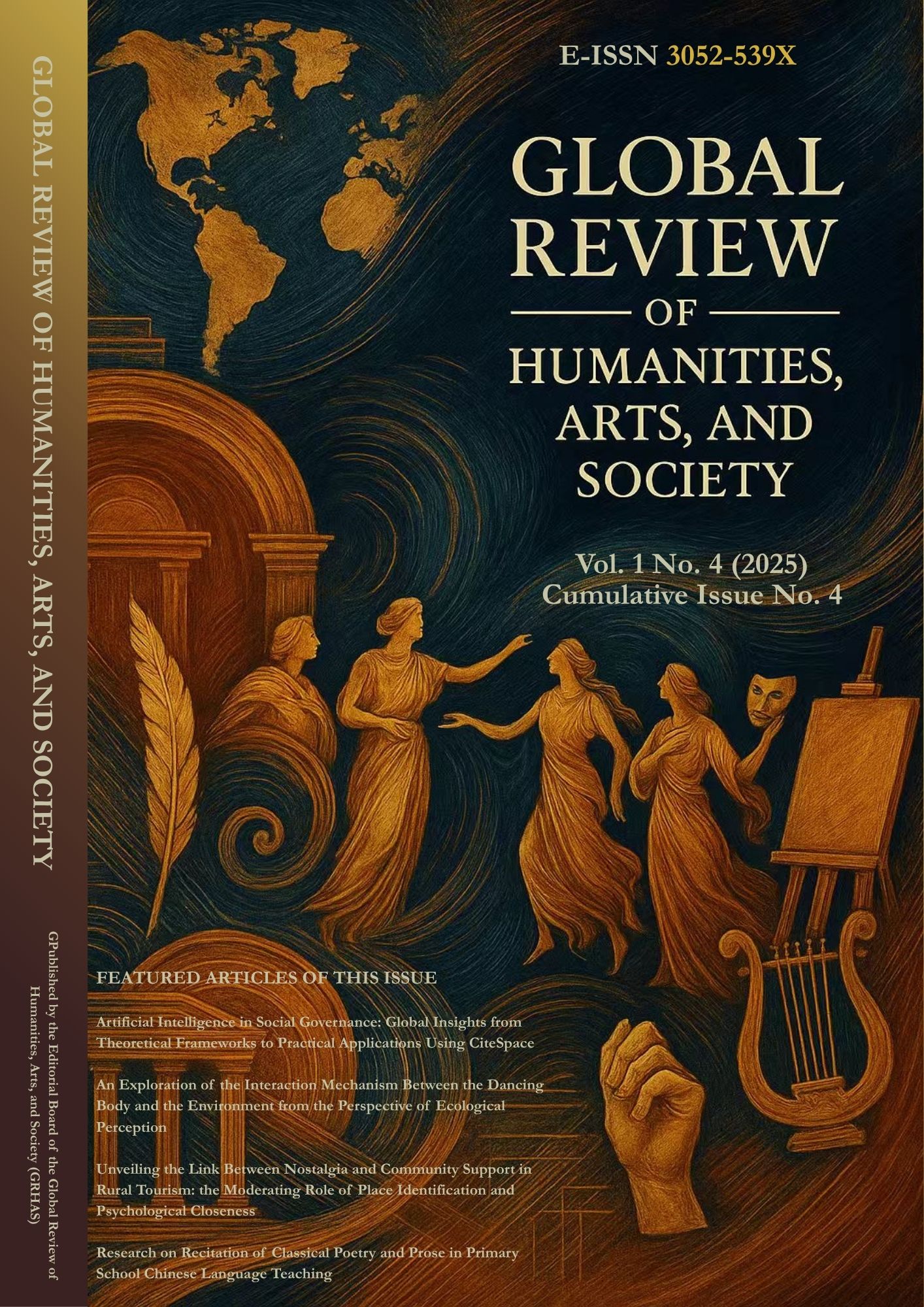
Cultural Interfaces in Perception, Memory, and Governance
Vol. 1 No. 4 (2025)Global Review of Humanities, Arts and Society (GRHAS), Volume 1, Issue 4 (2025), presents a collection of original research and theoretical investigations under the theme “Cultural Interfaces in Perception, Memory, and Governance.”
This issue features four peer-reviewed articles that explore interdisciplinary approaches to affect, education, embodiment, and digital governance:
-
Affective belonging and community engagement: Examines how nostalgia psychologically motivates community support behavior in rural tourism contexts.
-
Cultural transmission through education: Investigates the pedagogical and cognitive value of classical poetry recitation in primary school Chinese language teaching.
-
Embodied perception in choreographic practice: Applies ecological perception theory to understand dancer–environment interaction in site-specific dance.
-
Digital governance and AI ethics: Offers a bibliometric and comparative study of global trends in AI-enabled social governance using CiteSpace analysis.
Together, these contributions articulate how emotion, body, technology, and cultural identity intersect within contemporary societal frameworks, advancing cross-disciplinary dialogue across the humanities, arts, and social sciences.
-
-
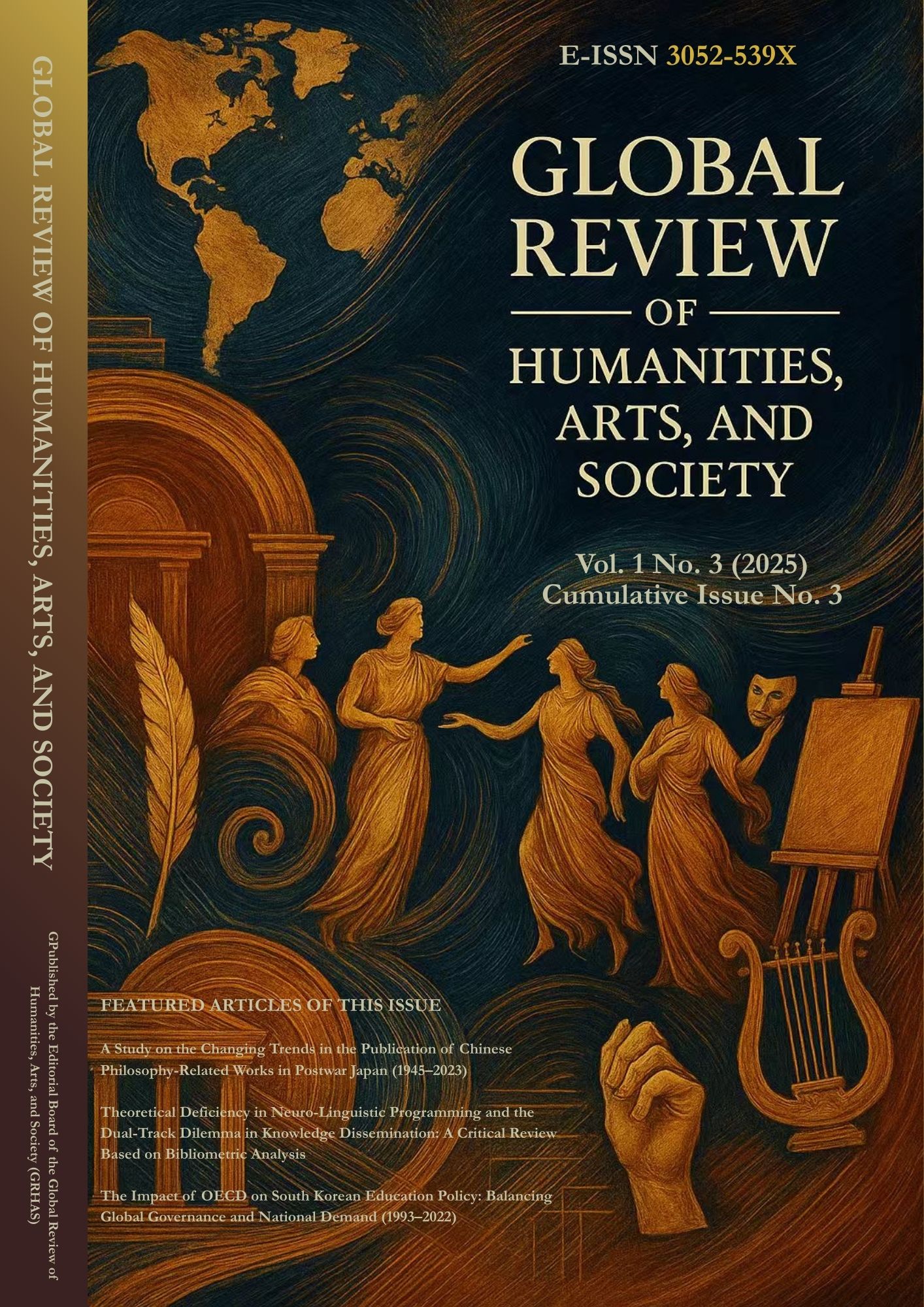
Norms, Knowledge, and Youth in Transition: Interdisciplinary Perspectives from East Asia
Vol. 1 No. 3 (2025)The August 2025 issue of Global Review of Humanities, Arts, and Society (GRHAS) presents seven original and theoretical articles that engage with pressing cultural, institutional, and epistemic transformations across East Asia. Contributors based in China and Malaysia offer grounded yet globally informed perspectives on topics ranging from international governance to philosophical historiography, and from educational reform to literary resistance.
Featured works investigate the role of the OECD in shaping South Korea’s education policies, statistical modeling of China’s rice trade dynamics, and the publishing trajectories of Chinese philosophy texts in postwar Japan. Other articles address critical gaps in the theory of Neuro-Linguistic Programming, propose age-sensitive frameworks for school-based crime prevention education, and examine shifting marriage values among Chinese youth under the influence of individualism. A final contribution explores subjection and gendered agency through a close reading of Lena Grove in Faulkner’s Light in August.
Together, these works embody GRHAS’s commitment to publishing scholarship that is theoretically robust, socially relevant, and transregionally engaged.
-
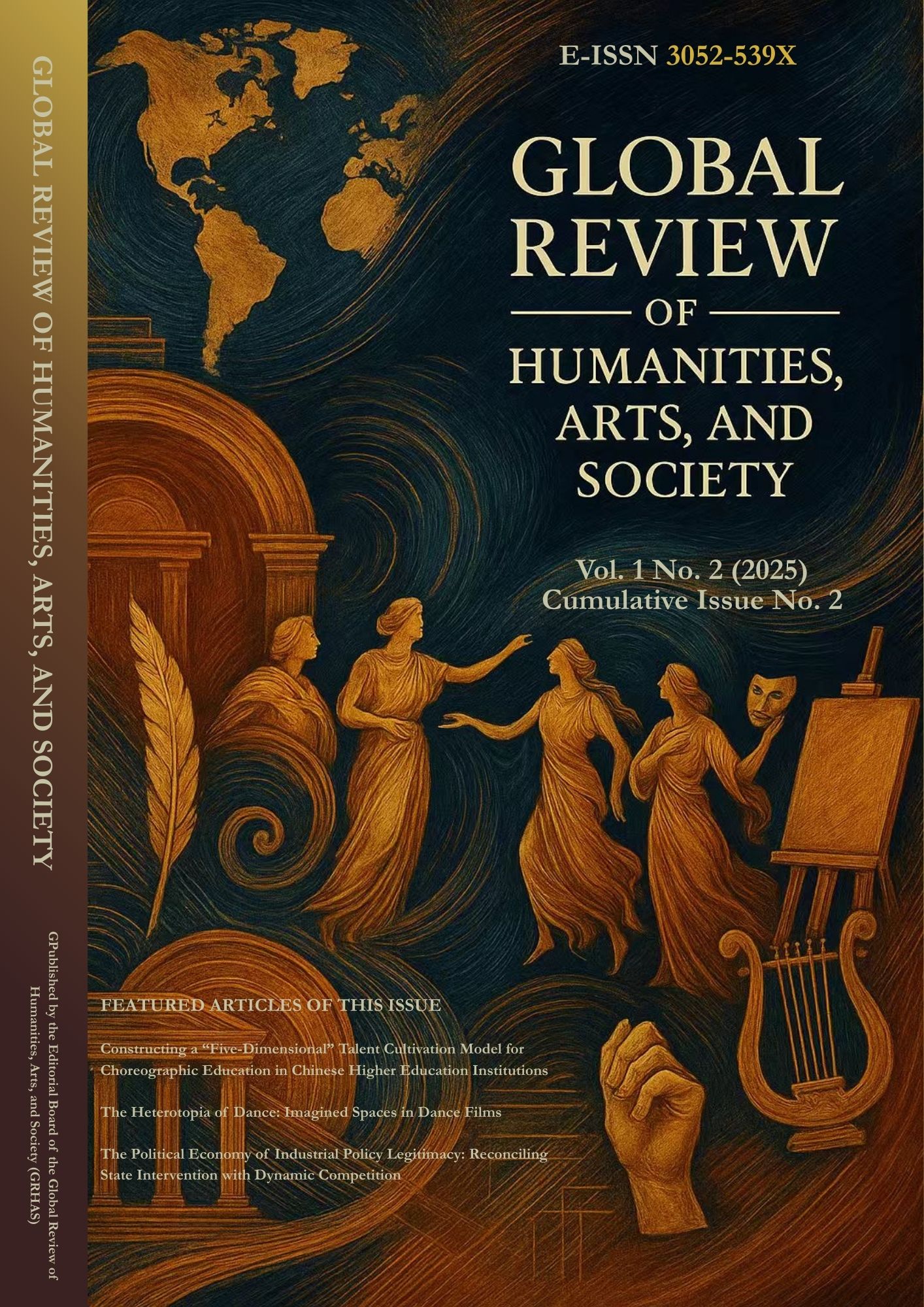
Imagining Structures, Negotiating Transitions: Body, State, and Meaning in a Shifting World
Vol. 1 No. 2 (2025)This issue of the Global Review of Humanities, Arts, and Society brings together cross-regional and cross-disciplinary insights into how individuals and institutions respond to cultural, emotional, and political flux. It features conceptual exploration of industrial policy legitimacy and dynamic state-market relationships; heterotopian space in dance cinema; and the symbolic reconstruction of authoritarian regimes in post-revolution Tunisia. Alongside these are human-centered inquiries into play-based parenting, tarot as urban self-reflection, and the spiritual revival among Asian youth. Across sectors—from public governance to private imagination—our contributors shed light on how new forms of order, resistance, and meaning are imagined and lived.
-
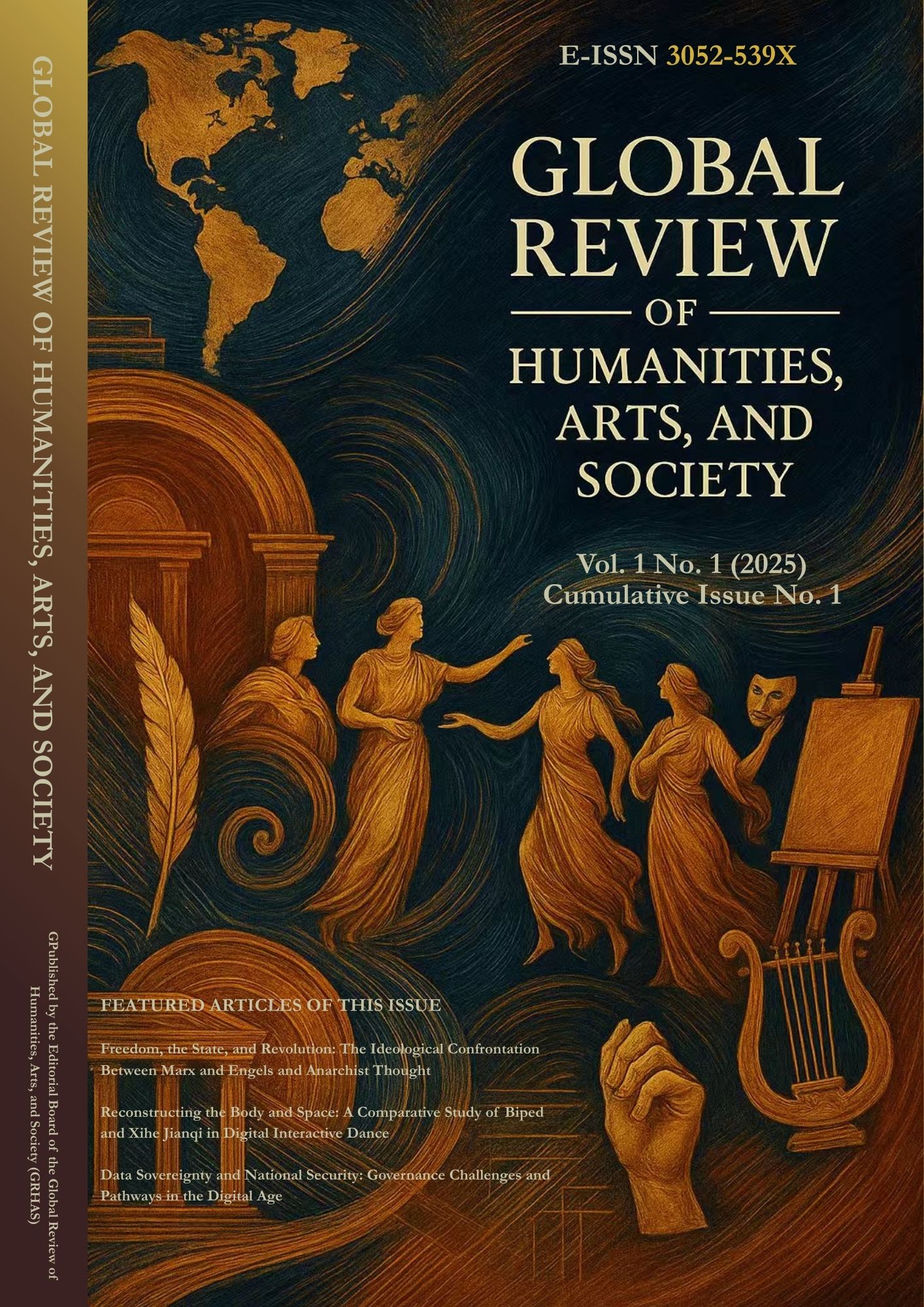
Navigating Governance, Expression, and Identity in the Digital Age
Vol. 1 No. 1 (2025)This thematic issue of Global Review of Humanities, Arts, and Society investigates the complex ways in which digital technologies intersect with governance systems, cultural expression, and identity formation in the contemporary world. Spanning political studies, philosophy, regional development, and the arts, the articles in this volume offer a diverse range of perspectives—from case studies on cultural and tourism integration in Chongqing, public service motivation among female civil servants, and data sovereignty in the digital age, to theoretical reflections on Marxist and anarchist ideologies, and the philosophical foundations of consciousness and reality. The issue also features creative interpretations of classical aesthetics, such as Plato’s theory of art as embodied in contemporary dance works exploring alienation and selfhood. Together, these contributions highlight how digital transformation mediates institutional systems and individual creativity, offering an interdisciplinary dialogue on the shifting realities of power, meaning, and self in the digital age.